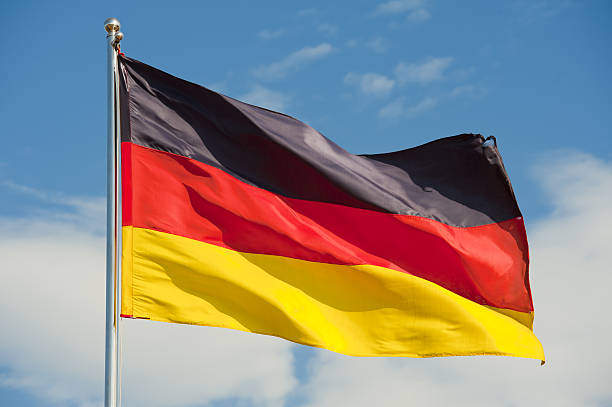
Germany, officially Bundesrepublik Deutschland, is a federal republic in Central Europe. Germany is Europe’s second largest state in terms of population, and number six in terms of size. The country borders Denmark, the Baltic Sea and the North Sea to the north, the Netherlands, Belgium, Luxembourg and France to the west, Switzerland and Austria to the south, the Czech Republic and Poland to the east. Germany is the second most populous state in Europe (after Russia) with approximately 81 million inhabitants. Berlin is the capital and Germany’s largest city with 3.5 million inhabitants. The city is one of the most important centers for European politics, culture and science. The city is an important transport hub in Central Europe and has some of the world’s leading universities, museums, theaters and orchestras, as well as three operas. The multicultural metropolis has residents from over 180 nations and is a magnet for people attracted by the liberal lifestyle and artistic freedom of the city. It is famous for its festivals, nightlife, contemporary architecture and avant-garde art.
Germany has a rich and varied cultural life in both literature, architecture, music and visual arts. The country has as many as 130 symphony orchestras, 300 theaters and more than 90,000 book titles are published annually, and is therefore one of Europe’s leading cultural nations. Germany is often referred to as Das Land der Dichter und Denker – the land of poets and thinkers – due to the strong influence of poets and philosophers on the culture. Germany is Europe’s most important industrial country and a key member of the European Union (EU). Germany’s importance in Europe’s cultural and political history is characterized by great fluctuations, but all in all, the country has had great importance. (Great Norwegian encyclopedia, Wikipedia).
In the period 1949–1990, Germany was divided. Contact between West Germany (Bundesrepublik Deutschland) and East Germany (Deutsche Demokratische Republik, GDR) was minimal. Berlin was also divided. East Berlin was the capital of the GDR, while West Berlin was a state in West Germany, surrounded on all sides by East German territory. In 1990, the country was reunited and now consists of 16 federal states with extensive self-government. One of Berlin’s and Germany’s most important symbols of both triumph and tragedy, the Brandenburg Gate is a city gate that stands at Pariser Platz in Berlin at the end of Unter den Linden. The square on the west side of the gate is named Platz des 18.März in memory of German reunification and the March Revolution.
A famous shopping promenade in Berlin is the Kurfürstendamm with many hotels, shops and restaurants. The ruined Kaiser-Wilhelm-Gedächtniskirche marks the eastern end of the boulevard. The ruins of the church’s tower from the Second World War have been preserved, and a new church has been built next to it. Further east, Kurfürstendamm merges into Tauentzienstraße, with KaDeWe, Europe’s largest department store and known for its exclusive selection. Here is also the Europa Center, built between 1963 and 1965. The 22-storey building contains a number of shops, restaurants, offices and a viewing platform. In the north-east direction is Berlin’s largest park, the Tiergarten. (Great Norwegian encyclopedia, Wikipedia; Google translated).
In Germany, we have visited the cities of Berlin, Munich and Hamburg. In this connection, we visited Designer Outlet Shopping in Ingolstadt outside Munich and likewise Designer Outlet Shopping in Neumünster, which is outside Hamburg. In both places it is possible to buy branded and quality clothes at greatly reduced prices. We describe these cities and places in more detail with a short info and with pictures in connection with this page in the blog.
Norsk:
Tyskland, offisielt Bundesrepublik Deutschland, er en forbundsrepublikk i Mellom-Europa. Tyskland er Europas nest største stat i folkemengde, og nummer seks i utstrekning. Landet grenser til Danmark, Østersjøen og Nordsjøen i nord, Nederland, Belgia, Luxembourg og Frankrike i vest, Sveits og Østerrike i sør, Tsjekkia og Polen i øst. Tyskland er den nest mest folkerike staten i Europa (etter Russland) med cirka 81 millioner innbyggere. Berlin er hovedstaden og Tysklands største by med 3,5 millioner innbyggere. Byen er et av de viktigste sentre for europeisk politikk, kultur og vitenskap. Byen er et viktig transportknutepunkt i Sentral-Europa og har noen av verdens fremste universiteter, museer, teatre og orkestre, samt tre operaer. Den multikulturelle metropolen har innbyggere fra over 180 nasjoner, og er en magnet for mennesker som tiltrekkes av den liberale livsstilen og kunstneriske friheten i byen. Den er berømt for sine festivaler, uteliv, samtidsarkitektur og avantgardekunst.
Tyskland har et rikt og variert kulturliv innenfor både litteratur, arkitektur, musikk og billedkunst. Landet har så mange som 130 symfoniorkestre, 300 teatre og det blir publisert mer enn 90 000 boktitler årlig, og er derfor en av Europas ledende kulturnasjoner. Tyskland omtales ofte som Das Land der Dichter und Denker – landet av diktere og tenkere – på grunn av poeters og filosofers sterke innflytelse på kulturen. Tyskland er Europas viktigste industriland og et sentralt medlem i Den europeiske union (EU). Tysklands betydning i Europas kulturhistorie og politiske historie kjennetegnes av store svingninger, men alt i alt har landet hatt stor betydning. (Store norske leksikon, Wikipedia).
I perioden 1949–1990 var Tyskland delt. Kontakten mellom Vest-Tyskland (Bundesrepublik Deutschland) og Øst-Tyskland (Deutsche Demokratische Republik, DDR) var minimal. Også Berlin var delt. Øst-Berlin var hovedstad i DDR, mens Vest-Berlin var en delstat i Vest-Tyskland, omgitt av østtysk territorium på alle kanter. I 1990 ble landet gjenforent og består nå av 16 delstater med utstrakt selvstyre. Brandenburger Tor er et av Berlins og Tysklands viktigste symboler på både triumfer og tragedier, og er en byport som står ved Pariser Platz i Berlin i enden av paradegaten Unter den Linden. Plassen på vestsiden av porten er kalt Platz des 18.März til minne om Tysklands gjenforening og marsrevolusjonen.
En kjent handlepromenade i Berlin er Kurfürstendamm med mange hoteller, forretninger og restauranter. Den ødelagte Kaiser-Wilhelm-Gedächtniskirche markerer boulevardens østlige ende. Kirkens tårnruin fra andre verdenskrig er bevart, og det er bygget en ny kirke ved siden av. Videre østover går Kurfürstendamm over i Tauentzienstraße, med KaDeWe, Europas største varehus og kjent for sitt eksklusive utvalg. Her ligger også Europa-Center, bygget mellom 1963 og 1965. Bygningen med 22 etasjer inneholder en rekke forretninger, restauranter, kontorer og en utsiktsplattform. I nordøstlig retning ligger Berlins største park, Tiergarten. (Store norske leksikon, Wikipedia).
I Tyskland har vi besøkt byene Berlin, München og Hamburg. I den forbindelse besøkte vi Designer Outlet Shopping i Ingolstadt utenfor München og likedan Designer Outlet Shopping i Neumünster som ligger utenfor Hamburg. På begge stedene er det mulig å kjøpe merke- og kvalitetsklær til sterkt reduserte priser. Vi beskriver disse byene og stedene nærmere med en kort info og med bilder i tilknytning til denne siden i bloggen.
 Vår vidunderlige verden