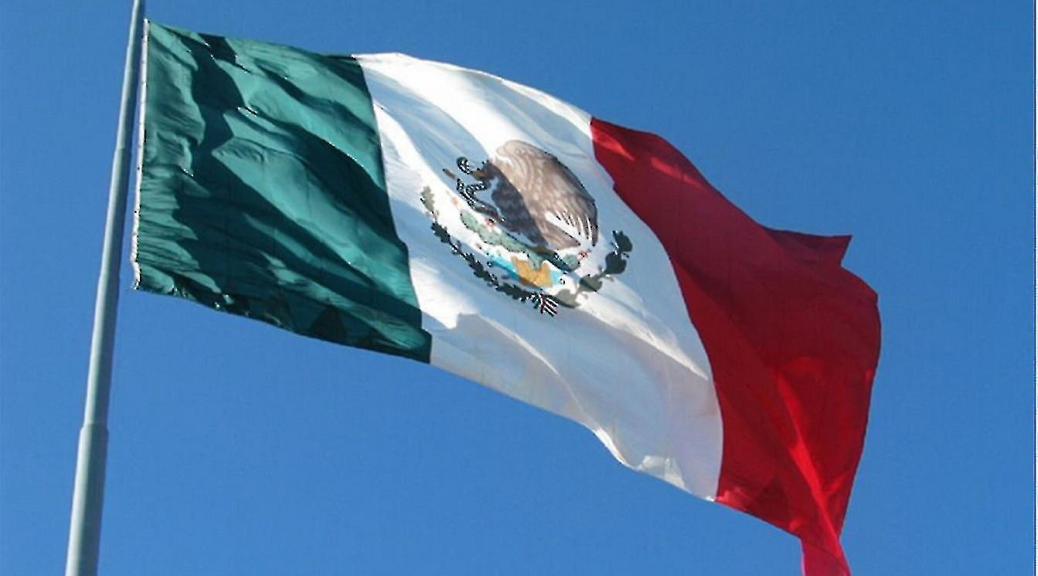
Mexico, officially the United Mexican States, is a North American republic bordering the United States to the north and Guatemala Belize to the southeast. To the west is the Pacific Ocean and to the east is the Gulf of Mexico and the Caribbean Sea. Mexico is considered part of Latin America, even though it is located in North America. The country has over one hundred million inhabitants. About 20 million of them live in and around the capital, Mexico City.
Agriculture, with maize, beans, chilli and avocado, originated in the valleys of the central highlands 8,000 years ago. Eventually, agricultural societies and high cultures arose in the areas south of the so-called Chichimeca Line, which runs from Guadalajara to Tampico. In the areas in the north, nomadic tribes lived who subsisted by hunting and fishing. The cultural area south of the line is called Mesoamerica, and extends down to Honduras, El Salvador and Nicaragua. Here, a number of cultures replaced each other, which had many common features. (Wikipedia).
The Spanish conquest began in 1519, when the Spanish conquistador Hernán Cortes landed in what is now known as Veracruz. In the course of a two-year campaign, the entire mighty Aztec Empire was overthrown, and within a few years all of central and southern Mexico was conquered. In the 19th century, Mexico became a political entity. Mexico was among Spain’s richest colonies, and among other things the silver mines in the central part of the country provided fertile ground for economic growth. Major cities such as Mexico City, Puebla, Guadalajara and others were centers of learning, art and commerce.
The 1940s and 50s were characterized by economic upswing, driven among other things by the export opportunities resulting from the USA’s participation in the war, as well as the lack of imported goods, which in turn promoted domestic industrial development. According to the World Bank, Mexico is the world’s 12th largest economy measured in purchasing power parity, and 13th largest in nominal terms. As such, the country plays a major role in the world economy. In 1994, Mexico went through a deep crisis with a drop in the peso against the dollar that greatly exceeded the purchasing power of ordinary people. Since then, Mexico has undergone an impressive improvement. The country is very dependent on the fluctuations in the USA, and is a major exporter of oil and gas. 85% of trade goes to the US. Greater domestic purchasing power has, however, kept growth up. While the eighties were characterized by oil-driven wealth, the nineties were a downturn. Millions of Mexicans in the United States contribute to the economy by sending money home. This money is the country’s second most important source of income after oil. (Wikipedia).
Mexico is the world’s largest Spanish-speaking country, and many Mexicans make it a point to speak correct, international Spanish. Mexico is a major producer of films, pop music and telenovelas (soap operas). Thus, Mexican Spanish is known and understood throughout the Spanish-speaking world. Some dialect differences exist within Mexico, and especially in the north and on the coasts on both sides marked dialects are spoken, but these are not too far from standard Latin American Spanish.
Tourism, primarily from the United States and Canada, but also increasingly from Europe and Japan, contributes to the balance of trade. Tourism is concentrated in large seaside towns along the coasts, such as Acapulco, Ixtapa and Huatulco on the Pacific coast, and Cancun on the Caribbean coast. With 39.3 million foreign visitors in 2017, Mexico was the third largest tourist destination in the world. In 1968, Mexico City hosted the Olympics. Furthermore, the country organized the Football World Cup in 1970 and in 1986. (Wikipedia).
We have visited Mexico, specifically Cozumel, in connection with a cruise. We describe Cozumel in more detail with a short info and with pictures in connection with this page in the blog.
Norsk:
Mexico, offisielt De forente meksikanske stater, er en nord-amerikansk republikk som grenser mot USA i nord og Guatemala Belize i sørøst. I vest ligger Stillehavet og i øst ligger Mexicogolfen og Det karibiske hav. Mexico regnes som en del av Latin-Amerika, selv om det ligger i Nord-Amerika. Landet har over hundre millioner innbyggere. Rundt 20 millioner av dem bor i og rundt hovedstaden Mexico by.
Jordbruket, med mais, bønner, chili og avocado, oppsto i dalene i det sentrale høylandet for 8000 år siden. Etter hvert oppsto det jordbrukssamfunn og høykulturer i områdene sør for den såkalte Chichimeca-linja, som går fra Guadalajara til Tampico. I områdene i nord bodde det nomadestammer som livnærte seg ved jakt og fiske. Kulturområdet sør for linja kalles Mesoamerika, og strekker seg ned til Honduras, El Salvador og Nicaragua. Her avløste en rekke kulturer hverandre, som hadde mange fellestrekk. (Wikipedia).
Den spanske erobringen begynte i 1519, da den spanske conquistadoren Hernán Cortes gikk i land på det stedet som i dag er kjent som Veracruz. I løpet av et toårig felttog ble hele det mektige aztekerriket styrtet, og i løpet av få år ble hele det sentrale og sørlige Mexico erobret. På 1800-tallet ble Mexico en politisk enhet. Mexico var blant Spanias rikeste kolonier, og blant annet sølvgruvene i den sentrale delen av landet ga grobunn for økonomisk vekst. Store byer som Mexico by, Puebla, Guadalajara og andre var sentra for lærdom, kunst og handel.
1940- og 50-tallet var preget av økonomisk oppsving, blant annet drevet fram av eksportmulighetene som følge av USAs krigsdeltakelse, samt mangelen på importvarer som igjen fremmet innenlandsk industriutvikling. Ifølge Verdensbanken er Mexico verdens 12. største økonomi målt i kjøpekraftsparitet, og 13. største målt nominelt. Landet spiller som sådan en stor rolle i verdensøkonomien. I 1994 gjennomgikk Mexico en dyp krise med fall i peso-kursen overfor dollar som gikk sterkt utover vanlige folks kjøpekraft. Siden har Mexico gjennomgått en imponerende forbedring. Landet er veldig avhengig av svingningene i USA, og er en stor eksportør av olje og gass. 85 % av handelen går til USA. En større innenlandsk kjøpekraft har imidlertid holdt veksten oppe. Mens åttitallet var preget av oljedrevet rikdom, ble nittitallet en nedtur. Flere millioner meksikanere i USA bidrar til økonomien ved å sende penger hjem. Disse pengene landets nest viktigste inntektskilde etter oljen. (Wikipedia).
Mexico er verdens største spansktalende land, og mange meksikanere legger vekt på å snakke korrekt, internasjonalt spansk. Mexico er en stor produsent av filmer, popmusikk og telenovelaer (såpeopera). Dermed er meksikansk spansk kjent og forstått i hele den spansktalende verden. Noen dialektforskjeller eksisterer innen Mexico, og spesielt i nord og på kystene på begge sider snakkes markerte dialekter, men disse er ikke er altfor langt fra standard latinamerikansk spansk.
Turisme, først og fremst fra USA og Canada, men også i økende grad fra Europa og Japan, bidrar til handelsbalansen. Turismen er konsentrert i store badebyer langs kystene, slik som Acapulco, Ixtapa og Huatulco på stillehavskysten, og Cancun på den karibiske kysten. Med 39,3 millioner utenlandske besøkende i 2017 var Mexico det tredje største turistmålet i verden. I 1968 arrangerte Mexico by OL. Videre arrangerte landet Fotball–VM i 1970 og i 1986. (Wikipedia).
Vi har besøkt Mexico, nærmere bestemt Cozumel, i forbindelse med cruise. Vi beskriver Cozumel nærmere med en kort info og med bilder i tilknytning til denne siden i bloggen.
 Vår vidunderlige verden