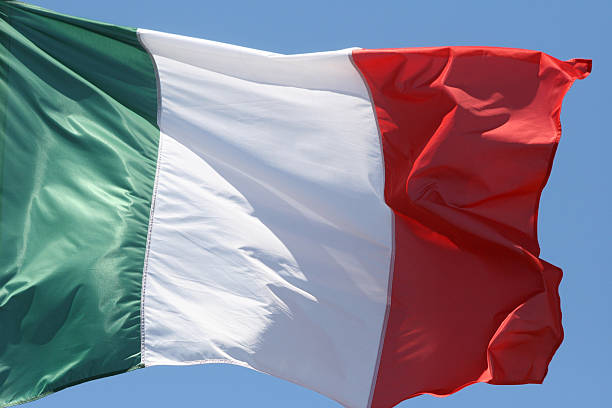
Italy is a republic in southern Europe with just over 60 million inhabitants. The country is bordered by the Alps to the north, the Adriatic Sea to the east, the Ionian Sea to the south, the Tyrrhenian Sea to the west and the Ligurian Sea to the northwest. The islands of Sicily and Sardinia belong to Italy, in addition to a number of other smaller islands. The neighboring countries in the north are France, Switzerland, Austria and Slovenia. The largest city and capital in Italy is Rome, with approximately 2.8 million inhabitants. (Great Norwegian encyclopedia, Wikipedia).
The Italian peninsula has played a leading role in large parts of European history, as the center of the Roman Empire, the cradle of the Renaissance and the center of the Catholic Church. Italy has a long history spreading from Neanderthals to modern humans and tribal societies. From one of these tribes, the Latins, the Romans developed. These developed via kingdom and republic into the Roman Empire, which stretched over large parts of Western and Southern Europe, North Africa and the Middle East. The Roman Empire was also for a long time the cultural power in the area as well as the military. After the Roman Empire, Italy was attacked by various tribes and built up slowly as a series of independent feudal kingdoms. Eventually, large trading centers developed in Italy, such as Amalfi, Florence, Genoa and especially Venice. Together with Rome, these also became from the 14th century artistic, literary and musical centers throughout the Renaissance and much of the Baroque. In the 18th century, the various small kingdoms were owned by first Spain, then Austria and towards the end France. Throughout the 19th century, the desire for independence grew steadily, and in 1861 the Kingdom of Italy was formed. Italy was in the First World War on the side of the Triple Entente. A general discontent among the population against misrule paved the way for Benito Mussolini, and he got Italy involved in World War II on the German side. After World War II, Italy chose to become a republic. (Great Norwegian encyclopedia, Wikipedia).
Italy is known for a division between north and south, where southern Italy did not settle after the unification of Italy. The differences have been in cultural and historical differences, in industrialization and in local patriotism. Areas in southern Italy are known for the Mafia in Sicily and the Camorra in Naples. Areas in the north are associated with industrialization and wealth, such as fashion houses in Milan and car factories in Turin.
There are few countries in the world that have such a rich and diverse cultural history as Italy. The country has for several periods played a very important role in European cultural history in a number of areas. Italy is the country in the world that has the most places on UNESCO’s list of world cultural and natural heritage. The cities of Rome, Florence and Venice are among the world’s most visited tourist destinations. The most important and best-known buildings in Italy are; the leaning tower of Pisa. The Colosseum, Castel Sant’Angelo, Roman Forum and Pantheon in Rome and the cathedrals in Florence and Venice. Italian food, wine, design, literature, art and music (especially opera) are known worldwide. In particular, the area of Tuscany is admired as a holiday, work and recreation location by cultural figures worldwide.
Italian cuisine is not one cuisine, but many. One can probably talk about a classic Italian kitchen and point to some particularly widespread and well-known dishes, such as pasta and pizza. Traditional Italian dishes are based on high-quality local products, where it is not necessary to do much with the ingredients to get a tasty result. This is one of the reasons why traditional Italian dishes are often easy to prepare. Pasta and pizza in particular are popular, even outside Italy’s borders. There are over 350 different types of pasta, the design of which varies from region to region. Pizza was a dish that until the 20th century was hardly served outside of Naples, but today it is served all over the world, in countless different variations.
There is a Norwegian institute in Rome (The Norwegian Institute in Rome for Archeology and Art History), which is a center for research, teaching and communication within archaeology, art and cultural history. (Great Norwegian encyclopedia, Wikipedia; Google translated).
We have been to Italy several times in connection with holidays, study visits and cruises. Italy is a great and interesting country to visit, among other things, because of its rich cultural history and food traditions. We have visited several cities in Italy which are described in more detail with a short info and with pictures which can be found in connection with this page in the blog.
Norsk:
Italia er en republikk i Sør-Europa med litt over 60 millioner innbyggere. Landet er avgrenset av Alpene i nord, av Adriaterhavet i øst, Joniske hav i sør, Tyrrenske hav i vest og Liguriske hav i nordvest. Øyene Sicilia og Sardinia hører til Italia, i tillegg til en rekke andre mindre øyer. Nabolandene i nord er Frankrike, Sveits, Østerrike og Slovenia. Den største byen og hovedstaden i Italia er Roma, med cirka 2,8 millioner innbyggere. (Store norske leksikon, Wikipedia).
Den italienske halvøya har spilt en hovedrolle i store deler av europeisk historie, som Romerrikets midtpunkt, renessansens vugge og den katolske kirkens sentrum. Italia har en lang historie som sprer seg fra neandertalere til moderne mennesker og stammesamfunn. Fra en av disse stammene, latinerne, utviklet romerne seg. Disse utviklet seg via kongedømme og republikk til Romerriket, som strakte seg over store deler av Vest- og Sør-Europa, Nord-Afrika og Midtøsten. Romerriket var også i lang tid den kulturelle stormakt i området såvel som den militære. Etter Romerriket ble Italia angrepet av diverse stammer og bygget opp sakte som en rekke selvstendige føydalriker. Etter hvert utviklet det seg store handelssentre i Italia, som Amalfi, Firenze, Genova og især Venezia. Sammen med Roma, ble disse også fra 1300-tallet av kunstneriske, litterære og musikalske sentre gjennom hele renessansen og mye av barokken. På 1700-tallet ble de forskjellige smårikene eid av først Spania, så Østerrike og mot slutten Frankrike. Gjennom 1800-tallet vokste stadig ønsket om selvstendighet, og i 1861 ble kongeriket Italia dannet. Italia var i første verdenskrig på Trippelententens side. En generell misnøye i befolkningen mot vanstyre banet vei for Benito Mussolini, og han fikk Italia med i andre verdenskrig på tysk side. Etter andre verdenskrig valgte Italia å bli republikk. (Store norske leksikon, Wikipedia).
Italia er kjent for et skille mellom nord og sør, der Sør-Italia ikke fant seg til rette etter samlingen av Italia. Forskjellene har ligget i kulturelle og historiske skiller, i industrialisering og i lokalpatriotisme. Områder i Sør-Italia er kjent for mafiaen på Sicilia og camorraen i Napoli. Områder i nord forbindes med industrialisering og rikdom, som motehus i Milano og bilfabrikker i Torino.
Det finnes få land i verden som har en så rik og mangfoldig kulturhistorie som Italia. Landet har i flere perioder spilt en svært viktig rolle i europeisk kulturhistorie på en rekke områder. Italia er det landet i verden som har flest steder på UNESCOs liste over verdens kultur- og naturarv. Byene Roma, Firenze og Venezia er blant verdens mest besøkte turistmål. De viktigste og mest kjente byggverkene i Italia er; det skjeve tårn i Pisa. Colosseum, Castel Sant’Angelo, Forum Romanum og Pantheon i Roma og domkirkene i Firenze og Venezia. Italiensk mat, vin, design, litteratur, kunst og musikk (særlig opera) er kjent over hele verden. Særlig er området Toscana beundret som et ferie-, arbeids- og rekreasjonssted av kulturelle personer verden over.
Det italienske kjøkken er ikke ett kjøkken, men mange. Man kan nok snakke om et klassisk italiensk kjøkken og vise til noen særlig utbredte og velkjente retter, som pasta og pizza. Tradisjonelle italienske matretter er basert på lokale produkter av høy kvalitet, der det ikke er nødvendig å gjøre så mye med råvarene for å få et velsmakende resultat. Dette er en av grunnene til at italienske tradisjonsretter ofte er enkle å tilberede. Særlig pasta og pizza er populært, også utenfor Italias grenser. Det finnes over 350 ulike sorter pasta, der utformingen varierer fra region til region. Pizza var en rett som fram til 1900-tallet knapt nok ble servert utenfor Napoli, men i dag serveres den over hele verden, i et utall ulike varianter.
Det finnes et norsk institutt i Roma (Det norske institutt i Roma for arkeologi og kunsthistorie), som er et senter for forskning, undervisning og formidling innenfor arkeologi, kunst- og kulturhistorie. (Store norske leksikon, Wikipedia).
Vi har vært i Italia flere ganger i forbindelse med ferier, studiebesøk og cruise. Italia er et flott og interessant land å komme til blant annet på grunn av sin rike kulturhistorie og mattradisjoner. Vi har besøkt flere byer som er nærmere beskrevet med en kort info og med bilder som finnes i tilknytning til denne siden i bloggen.
 Vår vidunderlige verden