Island is a European republic, and is an island in the North Atlantic on the Mid-Atlantic Ridge, just south of the Arctic Circle. The country has around 366,500 inhabitants of 2020, and an area of 103,000 km². The island’s capital and largest city is Reykjavík, with approximately 123,000 inhabitants (2016), which with suburbs and surrounding areas on the southwest coast is home to two-thirds of the island’s population. The capital region is a larger urbanized area around the capital, and this together has a population of around 217,000, which makes up around 65% of the country’s total population. The region consists of, in addition to Reykjavík, also the cities of Kópavogur, Hafnarfjörður, Garðabær, Mosfellsbær, Seltjarnarnes, and Kjósarhreppur. (Wikipedia; Google translated).
The landscape is characterized by lava deserts, mountains and volcanoes, and is uninhabited. Iceland is a volcanic island which, in addition to being at the intersection of the North American and Eurasian continental plates, also lies above a hotspot. The island is therefore volcanically and geologically active. But the geological activity also provides hot springs which the Icelanders use for heating, power generation and in the tourism industry. Iceland has an active «pool culture» in the many outdoor swimming pools, which are heated by hot springs. Reykjavík has seven public baths, of which only one is under cover.
According to Landnámabók, Norwegians were the first settlers on the island in the year AD 874, when Ingolf Arnarsson settled there. From 1262 to 1918, Iceland was part of the Norwegian, and finally the Danish monarchy. Iceland became independent from Denmark during the Second World War, and the Republic of Iceland was established on 17 June 1944. (Wikipedia; Google translated).
Today, Iceland is a democratic country with a free market economy. In recent years, Iceland has been ranked among the richest and most developed nations in the world. Development stagnated somewhat as a result of the financial crisis in 2008, which led to the collapse of three of the country’s largest banks. Iceland is also a very peaceful country, and has been at the top of the table from the Global Peace Index since 2008.
The most famous Icelandic contributions to classical literature are the Icelanders’ sagas from the time when the island was populated. The most famous of these is Njål’s saga, an epic description of a blood revenge, as well as the Grønlendingenes saga and Eirik Raude’s saga, which deals with the discovery and settlements in Greenland and Vinland (today’s Newfoundland and Labrador). Other famous and popular Icelandic sagas include Egil’s saga, Laksdøla saga, Grette’s saga, Gisle Sursson’s saga and Gunnlaug Ormstunge’s saga. (Wikipedia; Google translated).
Iceland has a rich musical life, and in recent years several Icelandic artists and bands have gained international recognition. Before the 1980s, Icelandic music was little known outside the country’s borders. This changed when the jazz funk/fusion band Mezzoforte broke through internationally with the hit «Garden Party» in 1983. The band’s success laid the foundation for extensive touring in Europe and Japan, and opened doors for other Icelandic artists such as The Sugarcubes, Björk, GusGus and Sigur Rós.
Tourism has also grown in the 2000s, but it took 50 years, from 1950 to the year 2000, before the number of foreign visitors per year exceeded the number of inhabitants on the island. With the rise of low-cost flights, the number of tourists increased sharply. From 2010, the number of tourists increased by 25 percent each year. In the record year 2018, 2.3 million tourists came to Iceland. In the same year, tourism accounted for 8.4 per cent of GDP and overtook fishing as the most important industry. (Wikipedia; Google translated).
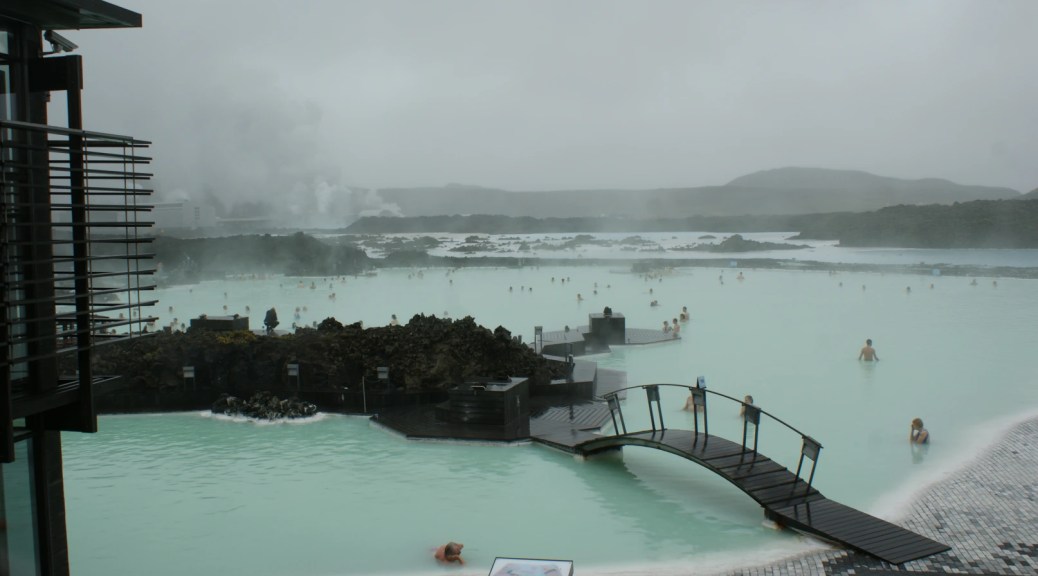
We have visited Reykjavik in connection with a cruise, and in that connection visited the most important tourist destinations Tingvalla, Gullfoss and the hot springs at Geysir. A trip to the Blue Lagoon was also an experience. There is much more to experience in Iceland so that we would like to go there again. (Google translated).
Norsk:
Island er en europeisk republikk, og er en øy i Nord-Atlanteren på Den midtatlantiske ryggen, like syd for polarsirkelen. Landet har rundt 366 500 innbyggere per 2020, og et areal på 103 000 km². Øyas hovedstad og største by er Reykjavík, med cirka 123 000 innbyggere (2016), som med forsteder og omkringliggende områder på sørvestkysten er hjemsted til to tredjedeler av øyas befolkning. Hovedstadsregionen er et større urbanisert område rundt hovedstaden, og denne har tilsammen en befolkning på rundt 217 000, noe som utgjør rundt 65 % av landets totale befolkning. Regionen består av foruten Reykjavík, også av byene Kópavogur, Hafnarfjörður, Garðabær, Mosfellsbær, Seltjarnarnes, og Kjósarhreppur. (Wikipedia).
Innlandet er preget av lavaørkener, fjell og vulkaner, og er ubebodd. Island er ei vulkansk øy som, i tillegg til å ligge i skjæringspunktet mellom de nordamerikanske og eurasiske kontinentalplatene som også ligger over et varmepunkt. Øya er med dette vulkansk og geologisk aktiv. Men den geologiske aktiviteten gir også varme kilder som islendingene utnytter til oppvarming, kraftproduksjon og i turistnæringen. Island har en aktiv «bassengkultur» i de mange svømmebassengene også utendørs, som er oppvarmet av varme kilder. Reykjavík har sju offentlige bad, av dem er kun ett under tak.
Ifølge Landnámabók var nordmenn de første bosetterne på øya i år 874 e.kr, da Ingolf Arnarsson slo seg ned der. Fra 1262 til 1918 var Island en del av det norske, og sist det danske monarkiet. Island ble uavhengig fra Danmark under andre verdenskrig, og republikken Island ble etablert den 17. juni 1944. (Wikipedia).
I dag er Island et demokratisk land med en fri markedsøkonomi. I de siste årene har Island blitt rangert blant de rikeste, og mest utviklede nasjoner i verden. Utviklingen stagnerte noe som et resultat av finanskrisen i 2008, som førte til at tre av landets største banker kollapset. Island er også et svært fredelig land, og har ligget på toppen av tabellen fra Global Peace Index siden 2008.
De meste kjente islandske bidragene til den klassiske litteraturen er islendingesagaene fra tiden da øya ble befolket. Den mest kjente av disse er Njåls saga, en episk beskrivelse av en blodhevn, samt Grønlendingenes saga og Eirik Raudes saga som omhandler oppdagelsen og bosetningene på Grønland og Vinland (dagens Newfoundland og Labrador). Andre kjente og populære islandske sagaer er blant annet Egils saga, Laksdøla saga, Grettes saga, Gisle Surssons saga og Gunnlaug Ormstunges saga. (Wikipedia).
Island har et rikt musikkliv, og de senere årene har flere islandske artister og band fått internasjonal anerkjennelse. Før 1980-årene var islandsk musikk lite kjent utenfor landets grenser. Dette endret seg da jazz funk/fusion-bandet Mezzoforte slo igjennom internasjonalt med hiten «Garden Party» i 1983. Bandets suksess la grunnlag for en ekstensiv turnévirksomhet i Europa og Japan, og åpnet dører for andre islandske artister som The Sugarcubes, Björk, GusGus og Sigur Rós.
Også turismen har vokst på 2000-tallet, men det tok 50 år, fra 1950 til år 2000, før antallet utenlandske besøkere per år overskred antallet innbyggere på øya. Med framveksten av lavprisfly økte antallet turister kraftig. Fra 2010 økte antallet turister med 25 prosent hvert år. Rekordåret 2018 kom det 2,3 millioner turister til Island. Samme år sto turismen for 8,4 prosent av BNP og passerte fisket som den viktigste næringen. (Wikipedia).
Vi har besøkt Reykjavik i forbindelse med cruise, og i den forbindelse besøkt de viktigste turistmålene Tingvellir, Gullfoss og de varme kildene ved Geysir. En tur i Den Blå Lagune ble det også, en opplevelse. Det mye mer å oppleve på Island slik at vi gjerne drar dit igjen.
 Vår vidunderlige verden