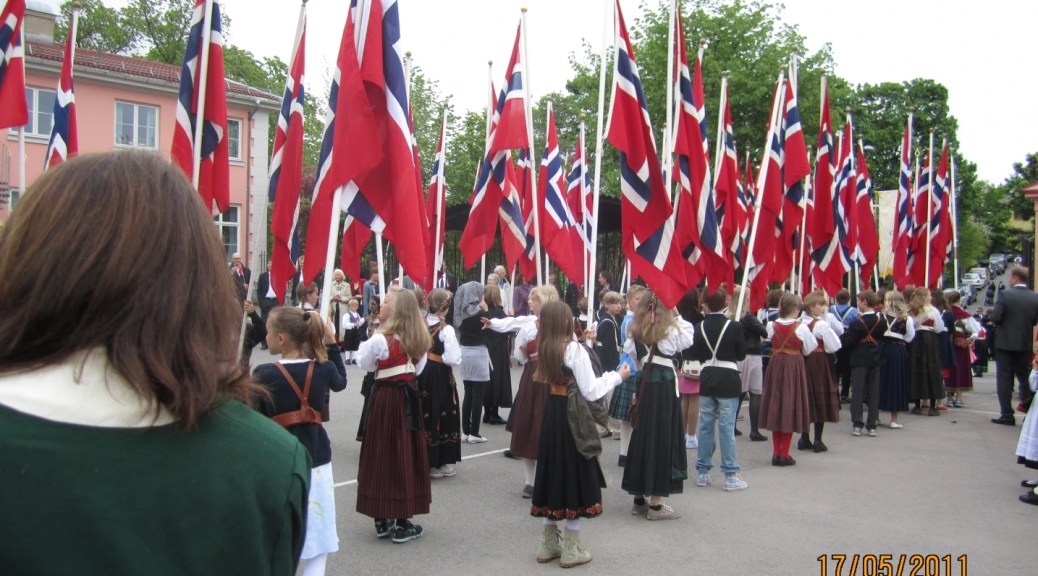
Norway, officially the Kingdom of Norway, is an independent state in the west of the Scandinavian Peninsula. Geographically, the country is long and narrow. The Kingdom of Norway also includes the islands of Jan Mayen and Svalbard. With these two arctic areas, Norway covers a land area of 385,000 km2 and has a population of approximately 5.4 million (2021). Mainland Norway borders Sweden in the east, Finland and Russia in the northeast.
Finnmark, the northern part of the country, probably got its first settlement around 8000 BC. after the coastal areas became ice-free 11,000 years BC. From around the year 200, there was a certain migration by sea from Rogaland and Hordaland to Nordland and Sør-Troms. The immigrant Norwegians were rural people who farmed and fished. The Black Death, which ravaged the country from 1348 to 1350, had disastrous consequences and led to approximately half the population dying and many villages being left deserted. (Wikipedia).
After the country was in a brief war with Sweden in 1814, a personal union with Sweden was negotiated. On the Norwegian side, there was growing dissatisfaction with the union at the end of the 19th century, which led to the dissolution of the Norwegian-Swedish staff union in 1905. This was confirmed by a referendum. The Norwegian government offered the Norwegian throne to the Danish Prince Carl. After a new referendum, the Storting elected him king and he took the name Haakon VII. (Wikipedia).
Norway is a parliamentary democracy and constitutional monarchy. Through the Sami Parliament and the Finnmark Act, the Sami part of the population has a certain degree of autonomy and influence over traditionally Sami areas. The Norwegian economy is based on a rich capitalist welfare society. Most sectors are left to private market players, although subject to significant regulation, among other things to ensure competition and environmental considerations. The authorities control some areas such as health, education and hydropower production.
Norway is a highly developed industrial country with a standard of living among the highest in the world. The country is rich in natural resources such as oil, natural gas, hydropower and fisheries, as well as agriculture, forestry, coal and minerals. At the same time, the large natural resources have made the country dependent on international commodity prices, especially the price of oil. Salmon farming began around 1960, and has become one of the country’s most important industries. In Norway, these natural resources have been distributed among the population. Important service areas such as health and higher education are state-funded, and the country has an extensive welfare system for its citizens. Since 2001, the UN has ranked Norway as the world’s best country to live in. (Wikipedia).
Norway is a significant contributor to the United Nations (UN), and has participated with soldiers in several foreign operations mandated by the UN. Norway is among the states that have participated since the founding of the UN, NATO, the Council of Europe, the OSCE and the Nordic Council, and in addition to these is a member of the EEA, the World Trade Organization, the Organization for Economic Co-operation and Development and is part of the Schengen area. (Wikipedia; Google translated).
We live in Trondheim, which is a city in central Norway. We will provide more detailed information and with pictures from Trondheim and similarly from the other cities and places in the country that are described in connection with this page in the blog.
Norsk:
Norge, offisielt Kongeriket Norge, er en selvstendig stat vest på Den skandinaviske halvøya. Geografisk sett er landet langt og smalt. Kongeriket Norge omfatter også øyene Jan Mayen og Svalbard. Med disse to arktiske områdene omfatter Norge et landareal på 385 000 km2 og har et innbyggerantall på cirka 5,4 millioner (2021). Fastlands-Norge grenser i øst til Sverige, i nordøst til Finland og Russland.
Finnmark, den nordlige delen av landet, fikk trolig den første bosetningen rundt 8000 år f.Kr. etter at kystområdene ble isfrie 11.000 år f.Kr. Fra rundt år 200 foregikk det en viss folkevandring sjøveien fra Rogaland og Hordaland til Nordland og Sør-Troms. De innvandrede nordmennene var bumenn som drev jordbruk og fiske. Svartedauden som herjet i landet fra 1348 til 1350, fikk katastrofale følger og førte til at omtrent halvparten av befolkningen døde og mange bygder ble liggende øde. (Wikipedia).
Etter at landet var i en kort krig med Sverige i 1814, ble det forhandlet frem en personalunion med Sverige. Fra norsk side ble det en økende misnøye med unionen på slutten av 1800-tallet, som førte til oppløsningen av den norsk-svenske personalunionen i 1905. Dette ble bekreftet ved en folkeavstemning. Den norske regjeringen tilbød den norske tronen til den danske prins Carl. Etter en ny folkeavstemning kåret Stortinget ham til konge, og han tok navnet Haakon VII. (Wikipedia).
Norge er et parlamentarisk demokrati og konstitusjonelt monarki. Den samiske delen av befolkningen har gjennom Sametinget og Finnmarksloven til en viss grad selvstyre og innflytelse over tradisjonelt samiske områder. Den norske økonomien bygger på et rikt kapitalistisk velferdssamfunn. De fleste sektorer er overlatt til private markedsaktører, dog underlagt en betydelig regulering, blant annet for å sikre konkurranse og miljøhensyn. Myndighetene kontrollerer noen områder som helse, utdanning og vannkraftproduksjon.
Norge er et høyt utviklet industriland med en levestandard blant de høyeste i verden. Landet er rikt på naturressurser som olje, naturgass, vannkraft og fiskerier, samt jordbruk, skogbruk, kull og mineraler. De store naturressursene har samtidig gjort landet avhengig av internasjonale råvarepriser, særlig oljeprisen. Oppdrett av laksefisk begynt rundt 1960, og har blitt en av landets viktigste næringer. I Norge har disse naturrikdommene blitt fordelt på den ganske befolkningen. Viktige tjenesteområder som helse og høyere utdanning er statsfinansiert, og landet har et omfattende velferdssystem for sine innbyggere. Siden 2001 har FN rangert Norge som verdens beste land å bo i. (Wikipedia).
Norge er en betydelig bidragsyter i De forente nasjoner (FN), og har deltatt med soldater i flere utenlandsoperasjoner med mandat fra FN. Norge er blant statene som har vært med fra grunnleggelsen av FN, NATO, Europarådet, OSSE og Nordisk råd, og er i tillegg til disse medlem av EØS, Verdens handelsorganisasjon, Organisasjonen for økonomisk samarbeid og utvikling og er en del av Schengen-området. (Wikipedia).
Vi bor i Trondheim, som er en by i Midt-Norge. Vi vil gi en nærmere info og med bilder fra Trondheim og likedan fra de andre byene og stedene i landet som er beskrevet i tilknytning til denne siden i bloggen.
 Vår vidunderlige verden