Egypt is a republic in north-east Africa, partly in south-west Asia (Sinai Peninsula). The country borders Libya, Sudan, Palestine (Gaza) and Israel. In the north, the country has a coastal strip towards the Mediterranean and in the east towards the Red Sea. The population of well over 100 million (2018) is the Arab world’s largest, and rapidly growing. Official language is Arabic.
Egypt has a documented history dating back to ancient times, and has played an important role in the region for several periods. This has contributed to the country’s political role and the people’s cultural self-awareness. In recent times, Egypt, by virtue of its history, size and location, has taken a leading role in the Arab world – and in the Middle East conflict. (Large Norwegian encyclopedia).
Egypt’s history spans three millennia under pharaonic dynasties, before the country was subject to foreign rule and became part of the Arab cultural circle; later with Islam as the central social force. Egypt was ruled by Great Britain from 1882 to 1922, with full independence only after the Second World War, in 1953.
The country is rich in ancient monuments. The pyramids at Giza and the Valley of the Kings at Thebes belong to the world’s cultural heritage, and are among the leading attractions in Egypt’s economically important tourist industry.
Egypt is North Africa’s largest economy, with a complex business community and a significant modern sector. Agriculture plays an important role for employment and value creation, while industry and the service sector are significant. Taxes from the Suez Canal are also an important source of income. (Large Norwegian encyclopedia; Google translated).
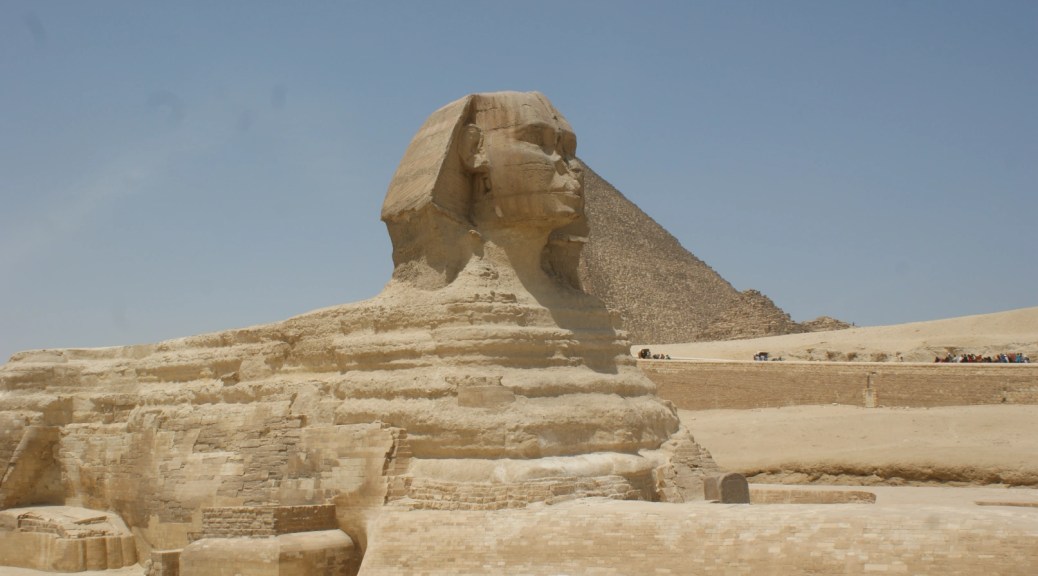
We have only visited Egypt in Africa in connection with a cruise. The longest stop was in Alexandria, where we were able to take part in exciting trips to the pyramids in Cairo, the Sphinx in Giza and a river cruise on the Nile. At times very poignant, as this was during the Arab Spring.
Norsk:
Egypt er en republikk nordøst i Afrika, delvis i Sørvest-Asia (Sinaihalvøya). Landet grenser mot Libya, Sudan, Palestina (Gaza) og Israel. I nord har landet kyststripe mot Middelhavet og i øst mot Rødehavet. Befolkningen på vel 100 millioner (2018) er araberverdenens største, og raskt voksende. Offisielt språk er arabisk.
Egypt har en dokumentert historie tilbake til oldtiden, og har spilt en viktig rolle i regionen i flere perioder. Dette har bidratt til landets politiske rolle og folkets kulturelle selvbevissthet. I nyere tid har Egypt, i kraft av sin historie, størrelse og beliggenhet, tatt en lederrolle i den arabiske verden – og i Midtøsten-konflikten. (Store norske leksikon).
Egypts historie omfatter tre årtusen under faraoiske dynastier, før landet ble underlagt fremmed styre og ble en del av den arabiske kulturkrets; senere med islam som sentral samfunnskraft. Egypt ble styrt av Storbritannia fra 1882 til 1922, med full selvstendighet først etter andre verdenskrig, i 1953.
Landet er rikt på oldtidsminner. Pyramidene ved Giza og Kongenes dal ved Theben tilhører verdens kulturarv, og er blant de fremste attraksjonene i Egypts økonomisk viktige turistindustri.
Egypt er Nord-Afrikas største økonomi, med et sammensatt næringsliv og en betydelig moderne sektor. Landbruk spiller en viktig rolle for sysselsetting og verdiskaping, samtidig som industrien og servicesektoren er betydelige. Avgifter fra Suezkanalen er også en viktig inntektskilde. (Store norske leksikon).
Vi har bare besøkt Egypt i Afrika i forbindelse med cruise. Lengte stoppet var i Aleksandria, der vi fikk være med på spennende turer til pyramidene i Kairo, sfinxen i Giza og elvecruise på Nilen. Til tider svært pennende, da dette var under den arabiske våren.
 Vår vidunderlige verden