
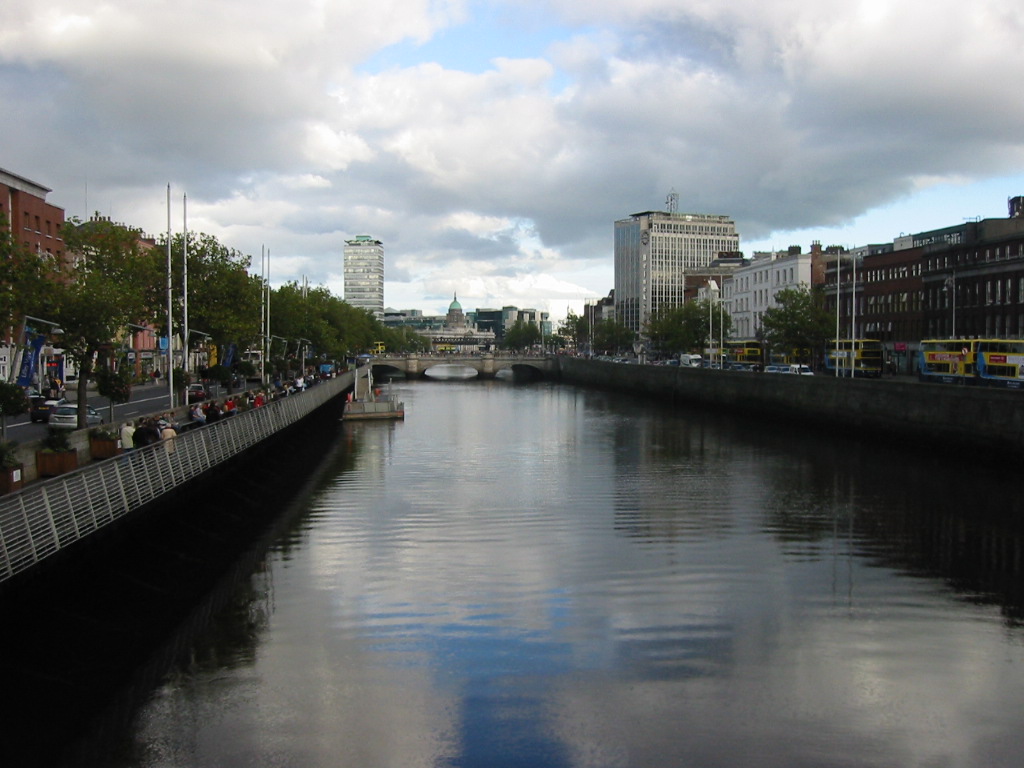
Dublin is the capital and largest city in Ireland, and is located in the province of Leinster, bounded in the south by the Dublin Mountains, part of the Wicklow mountain range. At the 2016 census, the city had a population of 1,173,179, while the population of traditional county Dublin as a whole was 1,347,359. The population of the Greater Dublin Area was 1,904,806. (Wikipedia).
A settlement was established in the area by the Gaels during or before the 7th century, followed by the Vikings. As the Kingdom of Dublin grew, it became Ireland’s most important settlement upon the Anglo-Norman invasion of Ireland in the 12th century. The city expanded rapidly from the 17th century and was the second largest in the British Empire and the sixth largest in Western Europe after the Acts of Union in 1800. After independence in 1922, Dublin became the capital of the Irish Free State, renamed Ireland in 1937. Dublin is a center for education, art and culture, administration and industry. As of 2018, the city was listed by the Globalization and World Cities Research Network (GaWC) as a global city, with a ranking of «Alpha minus», placing it as one of the top thirty cities in the world. Dublin celebrated its «official» millennium in 1988, meaning that the Irish government recognized 988 as the year the city was settled, and that this first settlement would later become the city of Dublin. It is now believed that the Viking settlement around 841 was preceded by a Christian ecclesiastical settlement known as Duibhlinn. According to some historians, part of the city’s early economic growth is attributed to a trade in slaves. Slavery in Ireland and Dublin reached its peak in the 9th and 10th centuries. Captives from slave raids and kidnappings, which captured men, women and children, brought income to the Gaelic Irish sea raids, as well as to the Vikings who had initiated the practice. The victims came from Wales, England, Normandy and beyond. (Wikipedia; Google translated).
We went on a weekend trip to Dublin in autumn 2006. We had heard about the city and found it to be an interesting destination with lots of music and good food and drink. We did some research before we left, and found out that there was going to be a concert there dedicated to ELVIS. As Elvis fans, we thought it sounded good. After arrival, we sought out a booking agency to find out where the concert was going to be and to buy tickets. They knew little about the concert, but found out that it was to take place in a venue on the outskirts of Dublin. We bought tickets and were told where to go. It was quite a long bus ride and the driver dropped us off at the designated place. It turned out that the concert was to be in an old, tired gymnasium at a school. We entered the venue, somewhat skeptically, spartanly equipped with tubular steel chairs and ditto tables. And a simple, ordinary tendon such as gymnasiums can have. Upon enquiry, we found out that the concert was by an artist Liam Murphy. Earlier in the same year, he had won a competition in Las Vegas as a «look-a-like» Elvis. He was from this place and had this concert in honor of family, known and unknown where he came from. The organizer was so impressed that we came from Norway to listen to him that we were placed together with the family in the hall. It turned out that the artist was a fantastically good copy of Elvis, and he also had a band with him that delivered fantastic music. We mention this as an example that you can have great experiences in places where you least expect it.
Norsk:
Dublin er hovedstaden og største byen i Irland, og ligger i provinsen Leinster, avgrenset i sør til Dublinfjellene, en del av fjellkjeden Wicklow. Ved folketellingen i 2016 hadde byen en befolkning på 1 173 179, mens befolkningen i det tradisjonelle grevskapet Dublin i sin helhet var 1 347 359 innbyggere. Befolkningen i Greater Dublin Area var 1 904 806. (Wikipedia).
En bosetning ble etablert i området av gælerne under eller før det 7. århundre, etterfulgt av vikingene. Etter hvert som kongedømmet Dublin vokste, ble det Irlands viktigste bosetning ved den anglo-normanniske invasjonen av Irland i det 12. århundre. Byen ekspanderte raskt fra det 17. århundre og var den nest største i det britiske imperiet og sjette største i Vest-Europa etter Acts of Union i 1800. Etter uavhengigheten i 1922 ble Dublin hovedstad i Den irske fristaten, omdøpt til Irland i 1937. Dublin er et senter for utdanning, kunst og kultur, administrasjon og industri. Fra og med 2018, ble byen oppført av Globalization and World Cities Research Network (GaWC) som en global by, med en rangering av «Alpha minus», som plasserer den som en av de tretti beste byene i verden. Dublin feiret sitt «offisielle» årtusen i 1988, noe som betyr at den irske regjeringen anerkjente 988 som året da byen ble bosatt, og at denne første bosetningen senere skulle bli byen Dublin. Det er nå antatt at vikingbosetningen rundt 841 ble innledet av en kristen kirkelig bosetning kjent som Duibhlinn. Ifølge noen historikere tilskrives en del av byens tidlige økonomiske vekst en handel med slaver. Slaveriet i Irland og Dublin nådde sitt høydepunkt i det 9. og 10. århundre. Fanger fra slaveangrep og kidnappinger, som fanget menn, kvinner og barn, brakte inntekter til de gæliske irske sjøraidene, så vel som til vikingene som hadde initiert praksisen. Ofrene kom fra Wales, England, Normandie og utover. (Wikipedia)
Vi var på en weekend tur til Dublin høsten 2006. Vi hadde hørt om byen og fant at det var et interessant reisemål med mye musikk og god mat og drikke. Vi gjorde litt undersøkelser før vi dro, og fant ut at det skulle være en konsert der tilegnet ELVIS. Som Elvis fans syntes vi det hørtes greit ut. Etter ankomst oppsøkte vi et booking-byrå for å finne ut hvor konserten skulle være samt kjøpe billetter. De visste lite om konserten, men fant ut at den skulle foregå i et lokale i utkanten av Dublin. Vi fikk kjøpt billetter samt anvist hvor vi skulle dra. Det ble en ganske lang busstur og sjåføren slapp oss av på anvist sted. Det viste seg at konserten skulle være i en gammel, sliten gymsal på en skole. Vi entret lokalet, noe skeptisk, spartansk utstyrt med stålrørstoler og ditto bord. Og en enkel, ordinær sene slik som gymsaler kan ha. På forespørsel fikk vi så greie på at konserten var ved en artist Liam Murphy. Han hadde tidligere samme år vunnet en konkurranse i Las Vegas som «look-a- like» Elvis. Han var fra dette stedet og hadde denne konserten til ære for familie, kjente og ukjente der han kom fra. Arrangøren ble så imponert av at vi kom fra Norge for å høre på han at vi ble plassert sammen med familien i salen. Det viste seg at artisten var en fantastisk god kopi av Elvis, og likedan hadde han med seg et band som leverte en fantastisk musikk. Vi nevner dette som et eksempel på at en kan få store opplevelser på steder der en minst venter det.


 Vår vidunderlige verden