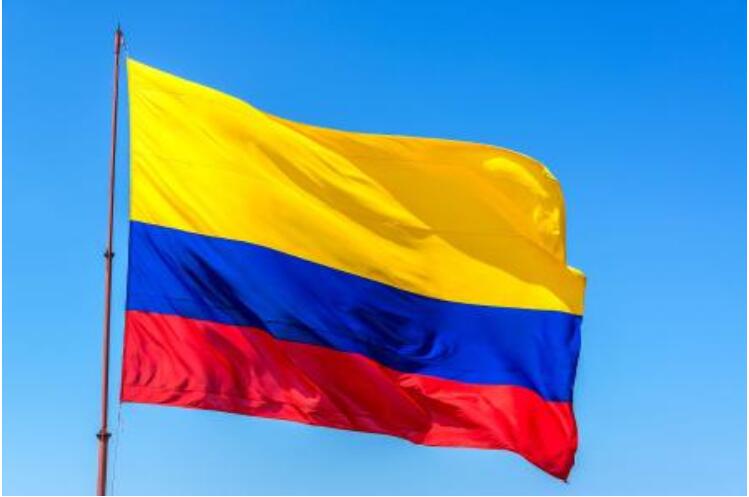
The Republic of Colombia is a country in the northwest of South America. Colombia borders Panama in the northwest, the Caribbean Sea in the north, Venezuela in the east, Brazil, Peru and Ecuador in the south, and the Pacific Ocean in the west. Colombia is the only country in South America that borders both the Pacific Ocean and the Caribbean Sea. Colombia is dominated by the Andes Mountains, which roughly divide the country into an eastern lowland area and a western highland. Colombia has coasts on both the Atlantic and Pacific oceans. Rio Magdalena is the main river and flows south-north in the western part of the country. Pico Cristobal Colon and Pico Simon Bolivar are the two highest mountains and are located in the mountain range of the Sierra Nevada de Santa Marta in northern Colombia.
Its total area is 1,141,748 km², making it the fourth largest country in South America and the 26th largest in the world. The capital is Bogota. The name Colombia comes from the explorer Christofer Columbus. The name was later adopted as the name of the Republic of Colombia, which was founded in 1819. With around 47 million inhabitants, Colombia is America’s fourth most populous country. It has great cultural and ethnic diversity.
Colombia is one of the world’s most important exporters of coffee, flowers, emeralds, coal and petroleum. The country’s economy has been characterized by strong growth in the 21st century, and in 2011 was the 31st largest in the world and the fourth largest in Latin America. (Wikipedia; Google translated).
Before Spain’s colonization of Colombia, the area was mostly inhabited by Indians who then had a population of between three and four million divided among hundreds of different tribes. Many of these Indians engaged in agriculture, were hunters and lived as nomads.
Columbia’s Caribbean north coast was visited and explored by a Spanish expedition led by Rodrigo de Bastidas in the year 1500. The port city of Santa Marta was founded in 1525 by the same Rodrigo de Bastidas. This was the first permanent Spanish settlement in Colombia. Until then, a number of attempts to establish a colony along Colombia’s north coast had failed due to the hostility and strength of the Indians. Especially in the area around Turbaco, where there was a large Indian town, the resistance of the Indians was strong, and an entire Spanish slave expedition was almost wiped out in 1509. This had serious consequences for the inhabitants, when a Spanish punitive expedition returned already the following year and almost wiped out the population. The rest of the indigenous population suffered the same fate over time through the Spanish ravages, diseases and forced labour, first along the Caribbean coast, later also along the Pacific coast and inland. In the 17th and 18th centuries, Latin America was mainly Spanish colonies. (Wikipedia).
Colombia’s history throughout the 19th century was marked by a series of violent conflicts between the conservatives and the liberals, who alternated in power. In 1903, the United States actively supported a rebellion that led to Panama breaking away from Colombia and becoming independent. In return for the support, the United States was allowed to build and have full control over the Panamá Canal. The United States continued its military cooperation with Colombia to maintain a friendly relationship with the Panama Canal’s strongest neighbor.
It was in the 20th century that Colombia started its own industry with the export of bananas, coffee and sugar. Colombia’s biggest official exports are oil and coffee. Tourism has also become an important source of income in recent years. (Wikipedia; Google translated).
We have visited Cartagena in Colombia in connection with a cruise in Karabia. It was an experience to visit the country and be able to wander around the exciting city on a journey of discovery. We would love to go back to Cartagena again.
Norsk:
Republikken Colombia er et land nordvest i Sør-Amerika. Colombia grenser mot Panama i nordvest, mot Det karabiske hav i nord, mot Venezuela i øst, mot Brasil, Peru og Equador i sør og mot Stillehavet i vest. Colombia er det eneste landet i Sør-Amerika som grenser til både Stillehavet og Det karibiske hav. Colombia er dominert av Andesfjellene, som grovt sett deler landet i et østlig lavlandsområde og et høyland i vest. Colombia har kyst både mot Atlanterhavet og Stillehavet. Rio Magdalena er den viktigste elva og renner sør-nord i den vestlige delen av landet. Pico Cristobal Colon og Pico Simon Bolivar er de to høyeste fjellene og ligger i fjellområdet Sierra Nevada de Santa Marta nord i Colombia.
Det totale arealet er på 1 141 748 km², hvilket gjør det til det fjerde største landet i Sør-Amerika og det 26. største i verden. Hovedstaden er Bogota. Navnet Colombia kommer fra oppdageren Christofer Columbus. Navnet ble seinere tatt i bruk som navn på Republikken Colombia som ble grunnlagt 1819. Med rundt 47 millioner innbyggere er Colombia Amerikas fjerde mest folkerike land. Det har stort kulturelt og etnisk mangfold.
Colombia er en av verdens viktigste eksportører av kaffe, blomster, smaragder, kull og petroleum. Landets økonomi har vært prega av sterk vekst i det 21. århundret, og var i 2011 den 31. største i verden og den fjerde største i Latin-Amerika. (Wikipedia).
Før Spanias kolonisering av Colombia var området for det meste bebodd av indianere som da hadde en befolkning på mellom tre og fire millioner fordelt på flere hundre forskjellige stammer. Mange av disse indianerne drev med jordbruk, var jegere og levde som nomader.
Columbias karibiske nordkyst ble besøkt og utforsket av en spansk ekspedisjon ledet av Rodrigo de Bastidas i år 1500. Havnebyen Santa Marta ble grunnlagt i 1525 av den samme Rodrigo de Bastidas. Dette var den første permanente spanske bosetningen i Colombia. Fram til da hadde en rekke forsøk på å etablere en koloni langs Colombias nordkyst mislyktes pga. indianernes fiendtlighet og styrke. Spesielt i området rundt Turbaco, der det lå en stor indianerby, var indianernes motstandsevne sterk, og en hel spansk slave-ekspedisjon ble nærmest utslettet i 1509. Dette fikk alvorlige konsekvenser for innbyggerne, da en spansk straffe-ekspedisjon vendte tilbake allerede året etter og nærmest utryddet befolkningen. Den samme skjebnen led resten av urbefolkningen over tid gjennom spanjolenes herjinger, sykdommer og tvangsarbeid, først langs den karibiske kysten, senere også langs stillehavskysten og innover i landet. På 1600- og 1700-tallet var Latin-Amerika hovedsakelig spanske kolonier. (Wikipedia).
Colombias historie gjennom det 19. århundre var preget av en rekke voldelige konflikter mellom de konservative og de liberale, som vekslet med å ha makten. I 1903 støttet USA meget aktivt opp om et opprør som førte til at Panama rev seg løs fra Colombia og ble selvstendig. Som takk for støtten fikk USA lov til å bygge og ha full kontroll over Panamá-kanalen. USA fortsatte sitt militære samarbeid med Colombia for å beholde et vennskapelig forhold til Panamakanalens sterkeste nabo.
Det var først på 1900-tallet at Colombia fikk i gang sin egen industri med eksport av banan, kaffe og sukker. Colombias største offisielle eksportvarer er olje og kaffe. Turisme har også blitt en viktig inntektskilde de siste åra. (Wikipedia).
Vi har besøkt Cartagena i Colombia i forbindelse med cruise i Karabia. Det var en opplevelse å besøke landet og kunne vandre rundt i den spennende byen på oppdagelsesferd. Vi drar gjerne tilbake til Cartagena igjen.
 Vår vidunderlige verden