Brazil, officially the Federal Republic of Brazil, is South America’s largest state, and the fifth largest in the world, both in terms of population and land area. It is the only American country where Portuguese is an official language.
Brazil’s coastline towards the Atlantic Ocean stretches over 7,491 km, and the country shares borders with other countries over a stretch of 16,885 km. In the north it borders Guyana, Venezuela, Suriname and French Guiana, in the northwest towards Colombia, in the west towards Bolivia and Peru, in the southwest towards Argentina and Paraguay and in the south towards Uruguay. The only South American countries that do not border Brazil are Chile and Ecuador. The country’s capital is Brasilia. The country is in area almost the size of the United States. (Wikipedia; Google translated).
Brazil had been inhabited by indigenous groups for at least 25,000 years, when it was discovered by the Portuguese explorer Pedro Alvares Cabral in the year 1500. For the following three centuries, the Portuguese settled the country and administered it as a commercial colony, which was largely based on slavery. In 1822, the then Prince Regent Dom Pedro I established an independent Brazil, the independent state was named the Empire of Brazil. The kingdom lasted until the next emperor, Dom Pedro II, was deposed in 1889. The current constitution, drafted in 1988, defines Brazil as a federal republic. Brazil’s economy is the world’s sixth largest by nominal GDP and seventh largest by purchasing power (as of 2011). Brazil is one of the world’s fastest growing major economies and economic reforms have brought the country new international recognition. Brazil is one of the founding members of the UN, G20, CPLP, Latin Union and more. (Wikipedia; Google translated).
In the late 19th and early 20th centuries, more than five million European and Asian immigrants came to Brazil. During this period, Brazil also became industrialized and began to exploit larger parts of its land areas. Brazilian democracy has been replaced by a dictatorship three times; 1930-1934 and 1937-1945 as well as 1964-1985. The current constitution dates from 1988. In the 2002 presidential election, Luiz Inacio Lula da Silva won after running for office four times previously. He was re-elected in 2006 with 60.8 percent of the vote. He was succeeded on January 1, 2011 by Dilma Rousseff, the country’s first female president.
Carnival in Brazil is a popular celebration with music and dance styles such as samba, bossa nova and forro. The Carnival is some of the most famous parts of Brazil’s cultural life refers to various activities in the period before the entrance to the Lent season, 40 days before the 1st Easter Sunday. The carnival may include processions, masquerades, balls, music, and indoor and outdoor parties. In sports, the country has secured five World Cup football titles. The martial art of capoeira also originates from Brazil.
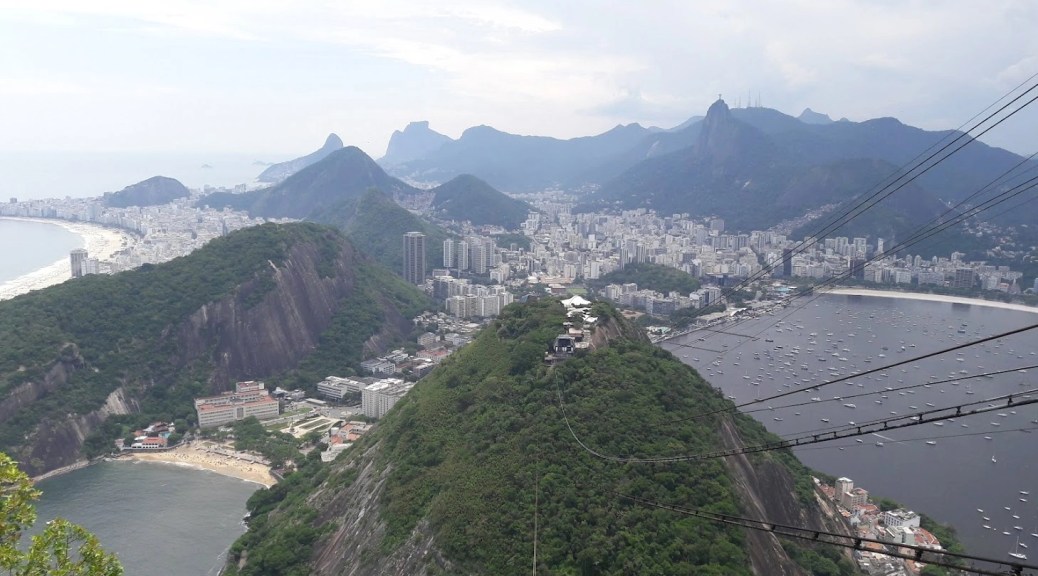
We have visited Rio de Janeiro and Sao Paulo in Brazil in connection with a cruise. It was an experience to take the cable car up to Sugarloaf Mountain, where we had a fantastic view over the city, as well as seeing the famous Christ statue and Copacabana. In Sao Paulo we went on a sightseeing trip to Santos where we visited the «Peles Museum» which was an experience for us football fans.
Norsk:
Brasil, offisielt Forbundsrepublikken Brasil, er Sør-Amerikas største stat, og den femte største i verden, både i folketall og i areal. Det er det eneste amerikanske landet hvor portugisisk er offisielt språk.
Brasils kystlinje mot Atlanterhavet strekker seg over 7 491 km, og landet deler grenser med andre land over en strekning på 16 885 km. I nord grenser det mot Guyana, Venezuela, Surinam og Fransk Guyana nordvest mot Colombia, i vest mot Bolivia og Peru, i sørvest mot Argentina og Paraguay og i sør mot Uruguay. De eneste søramerikanske landene som ikke grenser mot Brasil er Chile og Ecuador. Landets hovedstad er Brasilia. Landet er i areal nesten på størrelse med USA. (Wikipedia).
Brasil hadde vært bebodd av urbefolkningsgrupper i minst 25 000 år, da det ble oppdaget av den portugisiske oppdagelsesreisende Pedro Alvares Cabral i år 1500. I de følgende tre århundrene bosatte portugiserne seg i landet og administrerte det som en kommersiell koloni, som i stor utstrekning var basert på slaveri. I 1822 opprettet den daværende prinsregent Dom Pedro I et uavhengig Brasil, den uavhengige staten fikk navnet Keiserdømmet Brasil.. Riket besto inntil den neste keiseren, Dom Pedro II, ble avsatt i 1889. Den nåværende grunnloven, utformet i 1988, definerer Brasil som en forbundsrepublikk. Brasils økonomi er verdens sjette største etter nominell BNP og syvende største etter kjøpekraft (pr. 2011). Brasil er en av verdens raskest voksende store økonomier og økonomiske reformer har gitt landet ny internasjonal anerkjennelse. Brasil er en av grunnleggerne av FN, G20, CPLP, Den latinske union med flere. (Wikipedia).
I slutten av det 19. og begynnelsen av det 20. århundre kom mer enn fem millioner europeiske og asiatiske immigranter til Brasil. I dette tidsrommet ble Brasil også industrialisert og begynte å utnytte større deler av sine landområder. Det brasilianske demokratiet har vært erstattet av et diktatur tre ganger; 1930-1934 og 1937-1945 samt i 1964-1985. Den nåværende grunnloven stammer fra 1988. I presidentvalget i 2002 seiret Luiz Inacio Lula da Silva etter at han hadde stilt til valg fire ganger tidligere. Han ble gjenvalgt i 2006 med 60,8 prosent av stemmene. Han ble 1. januar 2011 etterfulgt av Dilma Rousseff, landets første kvinnelige president.
Karnevalet i Brasil er en folkelig fest med musikk- og dansestiler som blant annet samba, bossa nova og forro. Karnevalet er noen av de mest kjente delene av Brasils kulturliv viser til ulike aktiviteter i perioden før inngangen til fastetiden, 40 dager før 1. påskedag. Karnevalet kan inneholde prosjesjoner, maskerader, ball, musikk og fester innendørs og utendørs. Innenfor sport har landet sikret seg fem verdensmesterskapstitler i fotball. Kampsporten capoeira stammer også fra Brasil.
Vi har besøkt byene Rio de Janeiro og Sao Paulo i Brasil i forbindelse med cruise. Det var en opplevelse å ta kabelbanen opp til Sukkertoppen hvor vi hadde en fantastisk utsikt ut over byen, likedan se den berømte Kristusstatuen og Copacabana. I Sao Paulo var vi med på sightseeingtur til Santos hvor vi besøkte «Peles Museum» som var en opplevelse for oss fotballinteresserte.
 Vår vidunderlige verden